A move can require stopping service at one address while starting it at another, with different dates, preferences, and billing details.
Guided service journey · Residential utility
A move has enough moving parts. Service shouldn’t add more.
A guided service journey that helps customers coordinate two addresses, two service dates, communication preferences, and final billing in one request.
At a glance
One request for a move that spans two homes.
Organize the request around customer intent, connect each address to its service date, and preserve context through review and confirmation.
A guided journey that makes the complete transition visible and provides useful next steps when the new address cannot be served.
01 · The challenge
One request has to coordinate two homes and one life event.
Customers are not managing a utility workflow. They are trying to make a move happen.
Starting service at a new address often overlaps with stopping service at the current one. The experience must keep both locations, both dates, customer preferences, and final billing details clear without forcing people to assemble the process themselves.
The redesigned journey makes those relationships visible, preserves context from step to step, and provides a deliberate review before anything changes.
Establish the service context
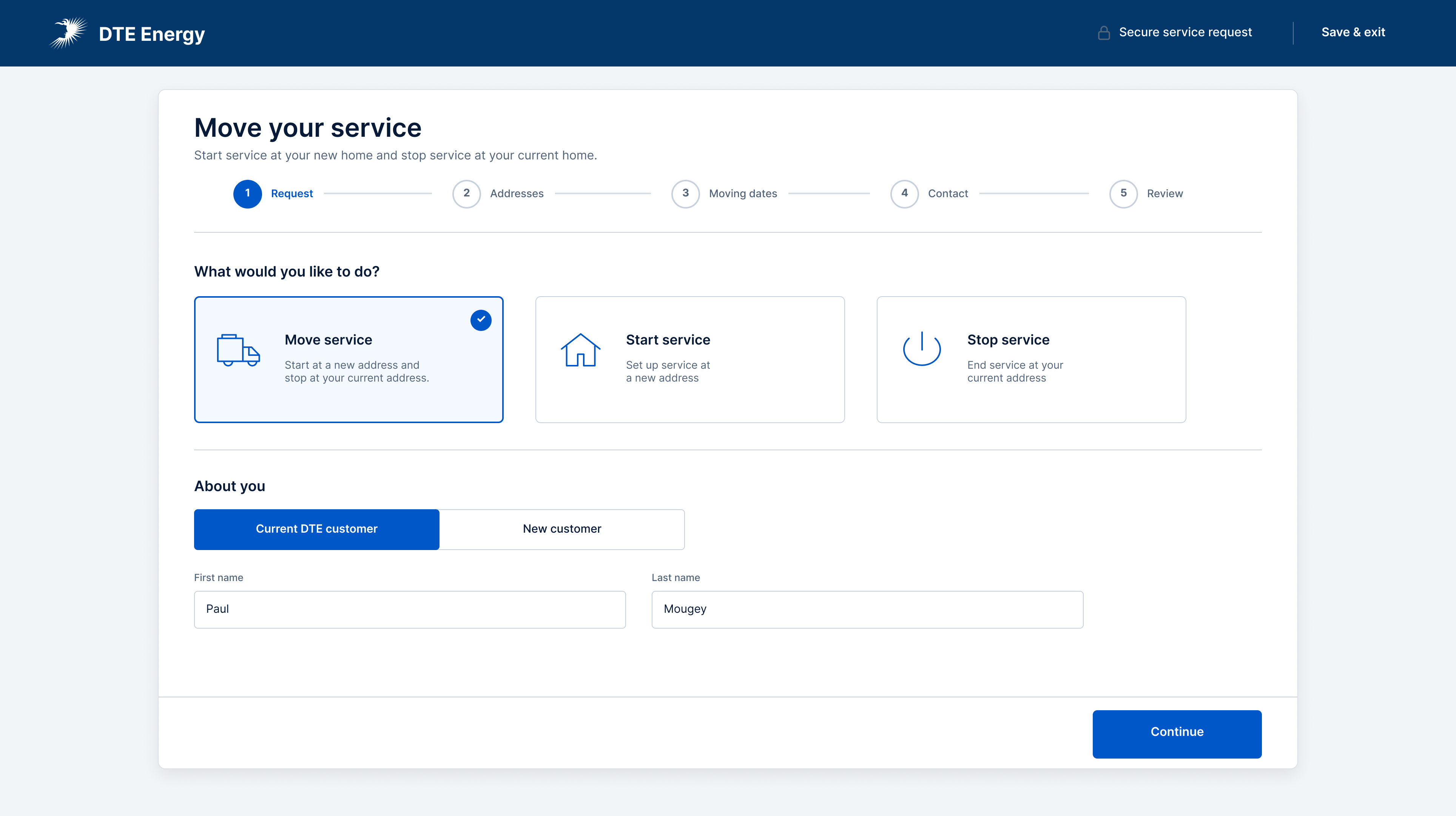
Begin with the customer’s actual intent: move, start, or stop service.
Coordinate place and time
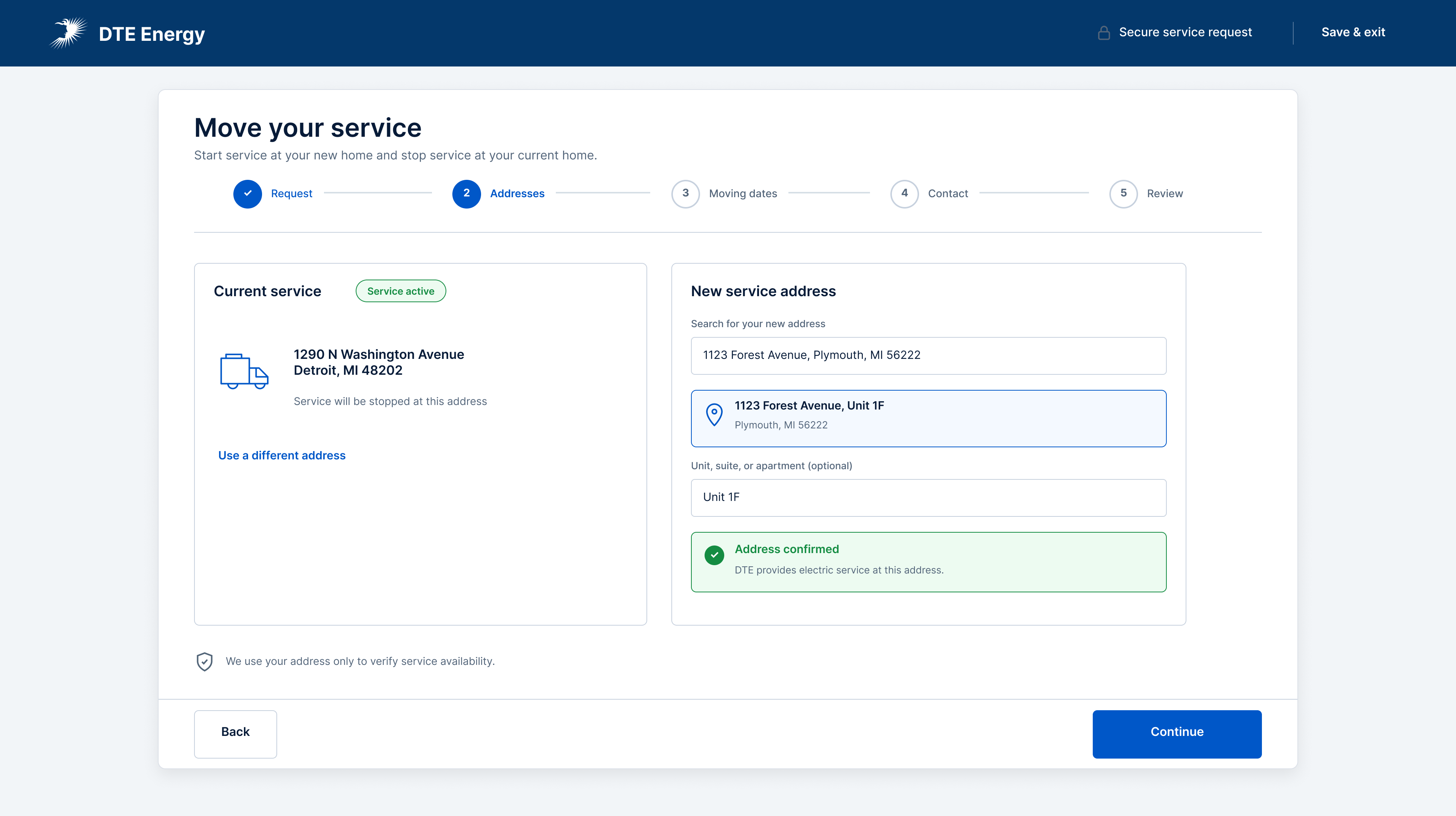
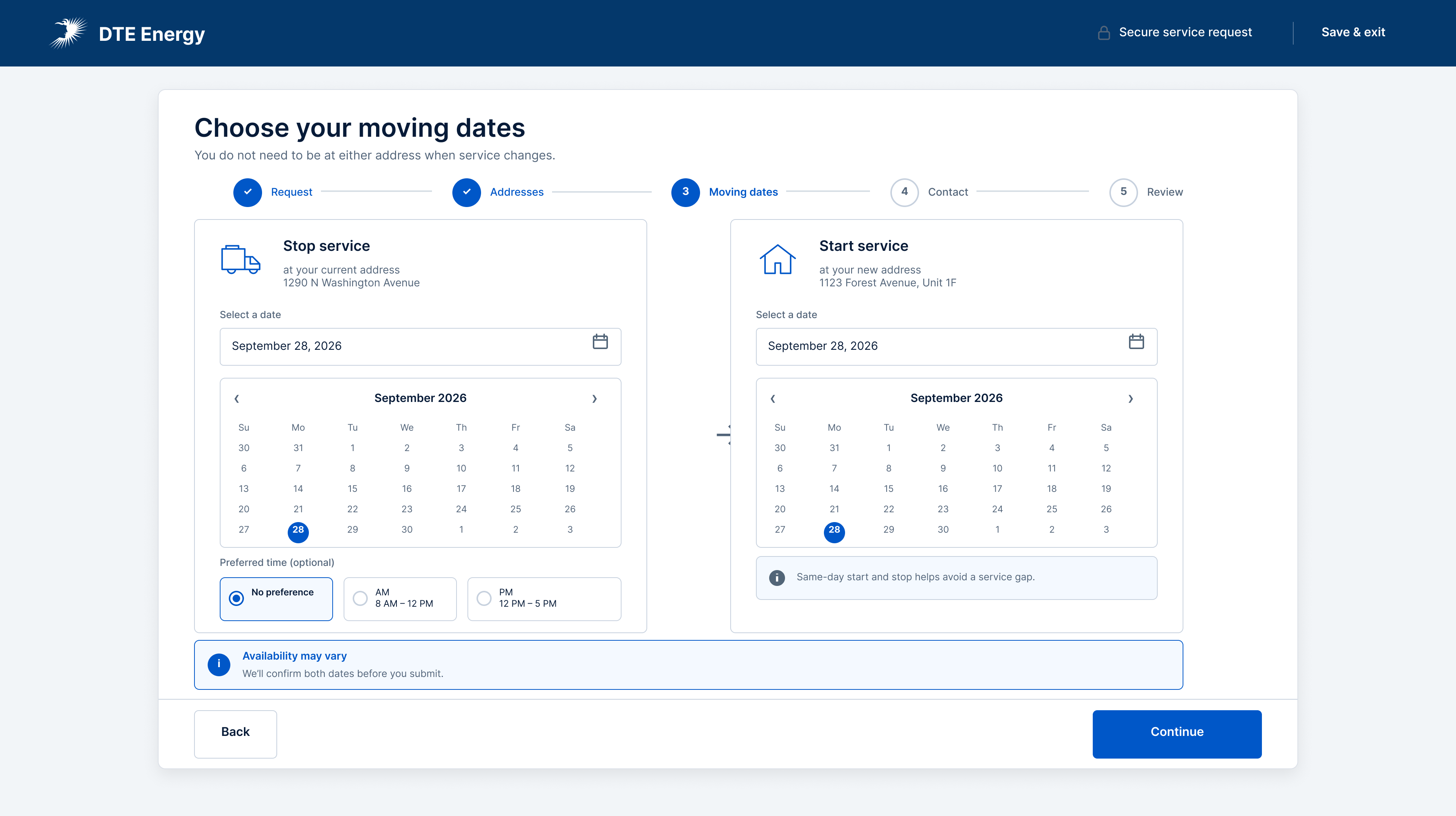
Keep the current and new address connected to their corresponding service dates.
Preserve review and control
Summarize every consequential detail before submission and confirm what happens next.
02 · The guided journey
Turn a complicated move into a visible sequence.
Five task-oriented stages carry the customer from intent to submission while the progress model makes the current step—and the remaining work—easy to understand. Select any screen to view it at full size.
01Define the request
02Connect both addresses
03Coordinate moving dates
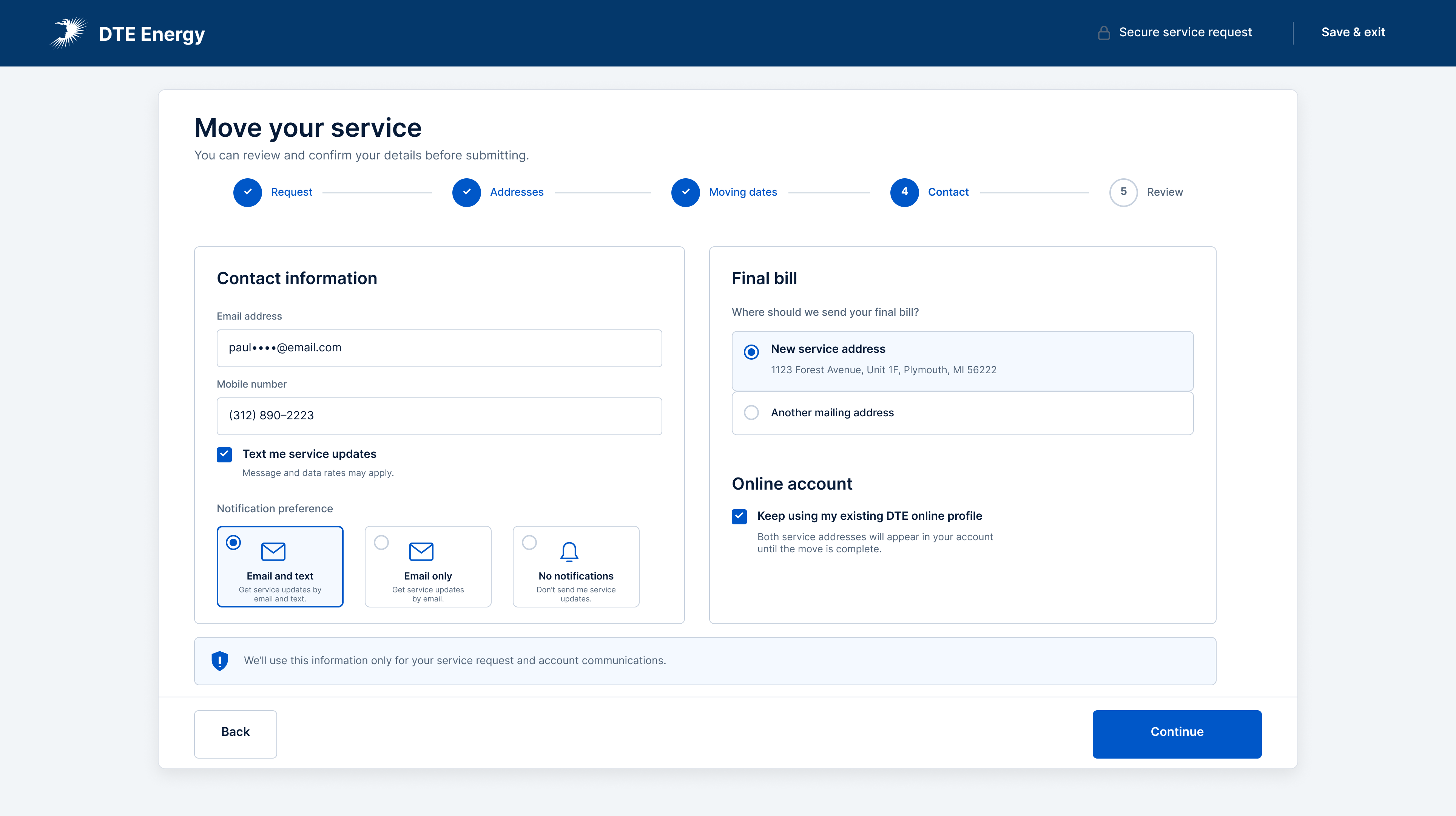
04Set contact and final billing
05Review before submitting
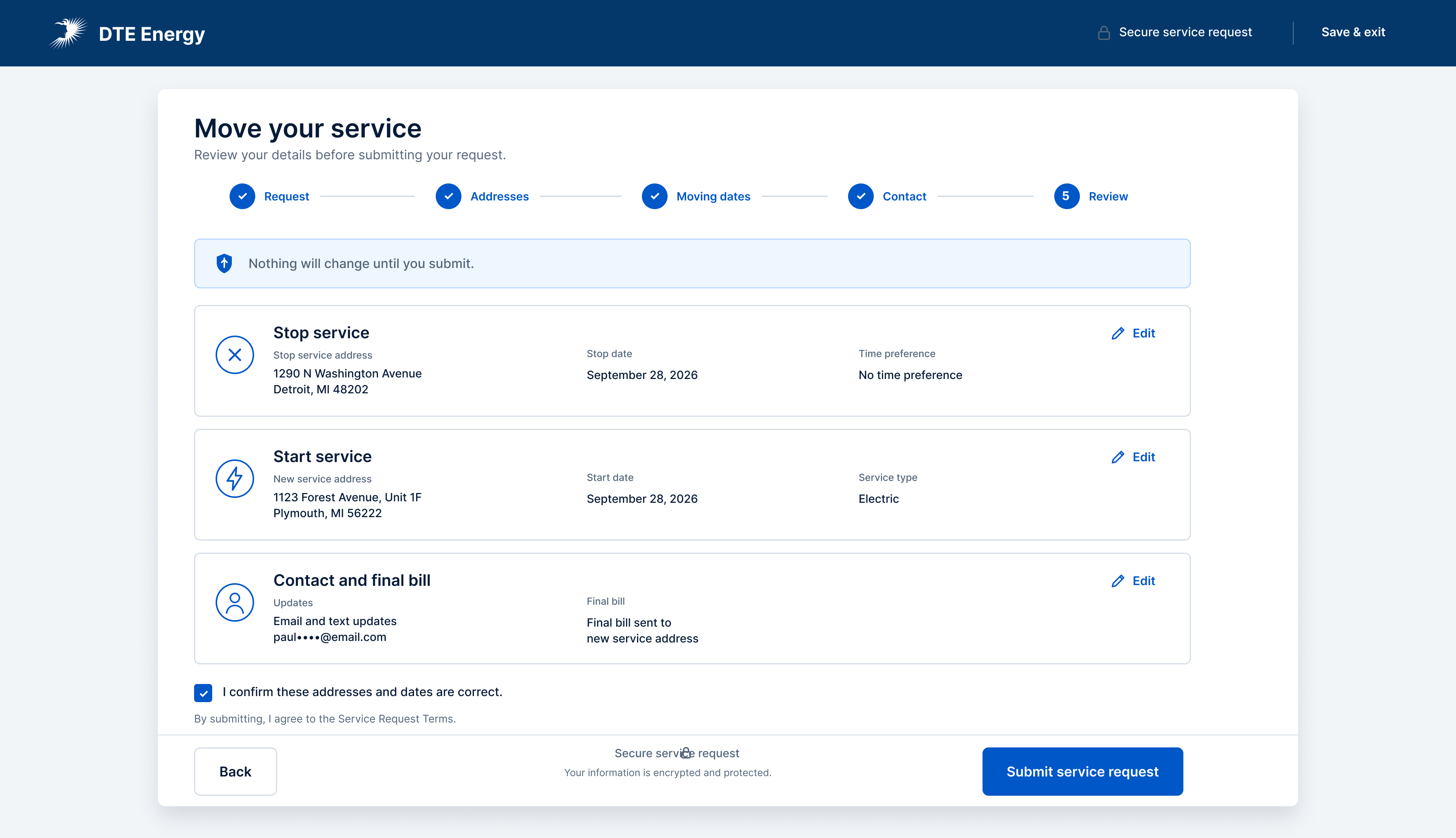
03 · One move, two service moments
Make the relationship visible instead of making customers remember it.
Close the current service cleanly.
The current address, stop date, timing preference, and final bill destination remain grouped as one understandable commitment.
Open the new service with confidence.
The new address is verified for availability, paired with a start date, and carried into the customer’s existing online account.
04 · Outcome states
Confirmation should resolve the request. Exceptions should resolve the next decision.
The system handles both the successful path and the moment a new address falls outside the provider’s service area.
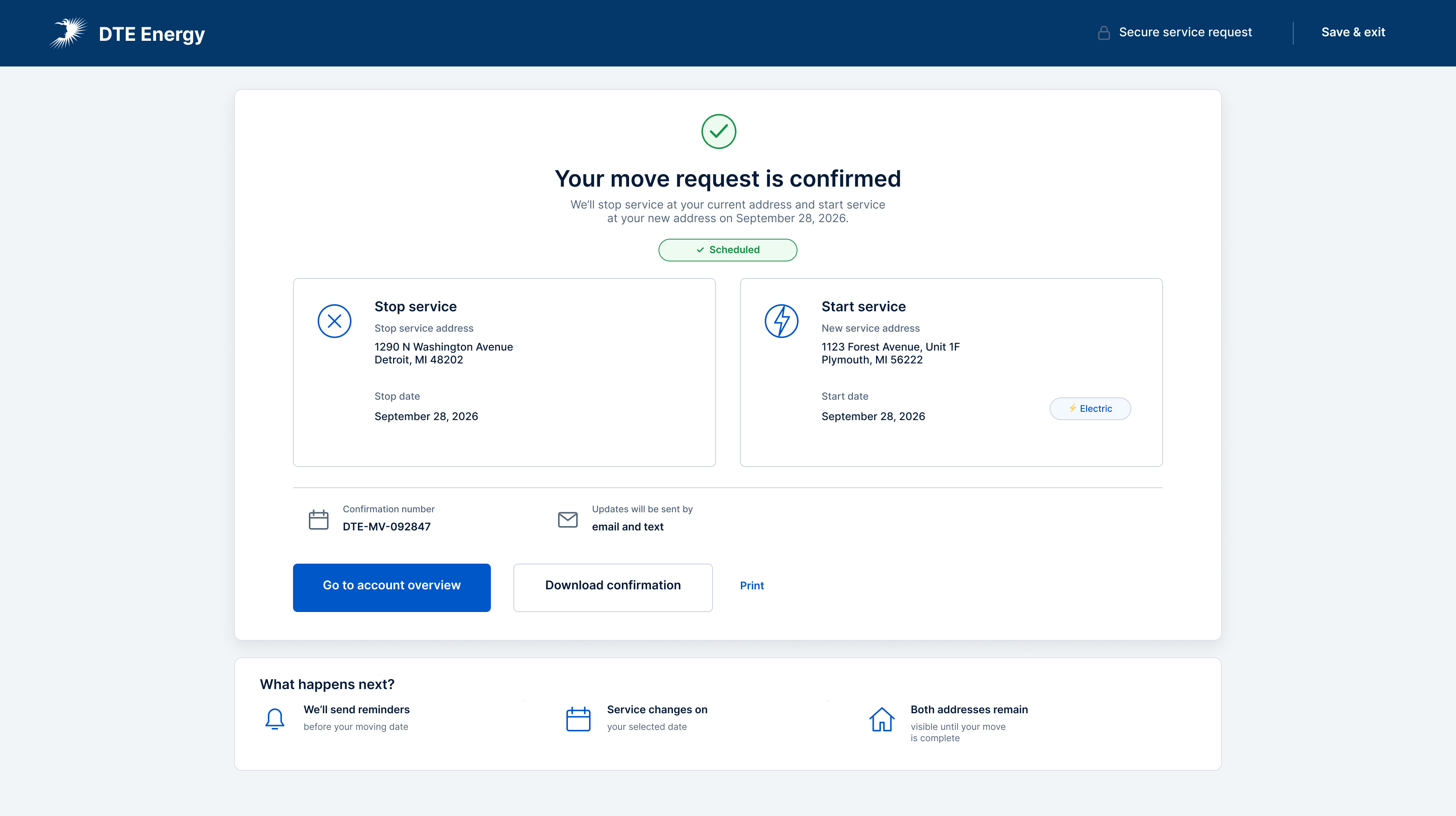
Show the scheduled dates, both service addresses, confirmation number, communication channel, and what happens next.
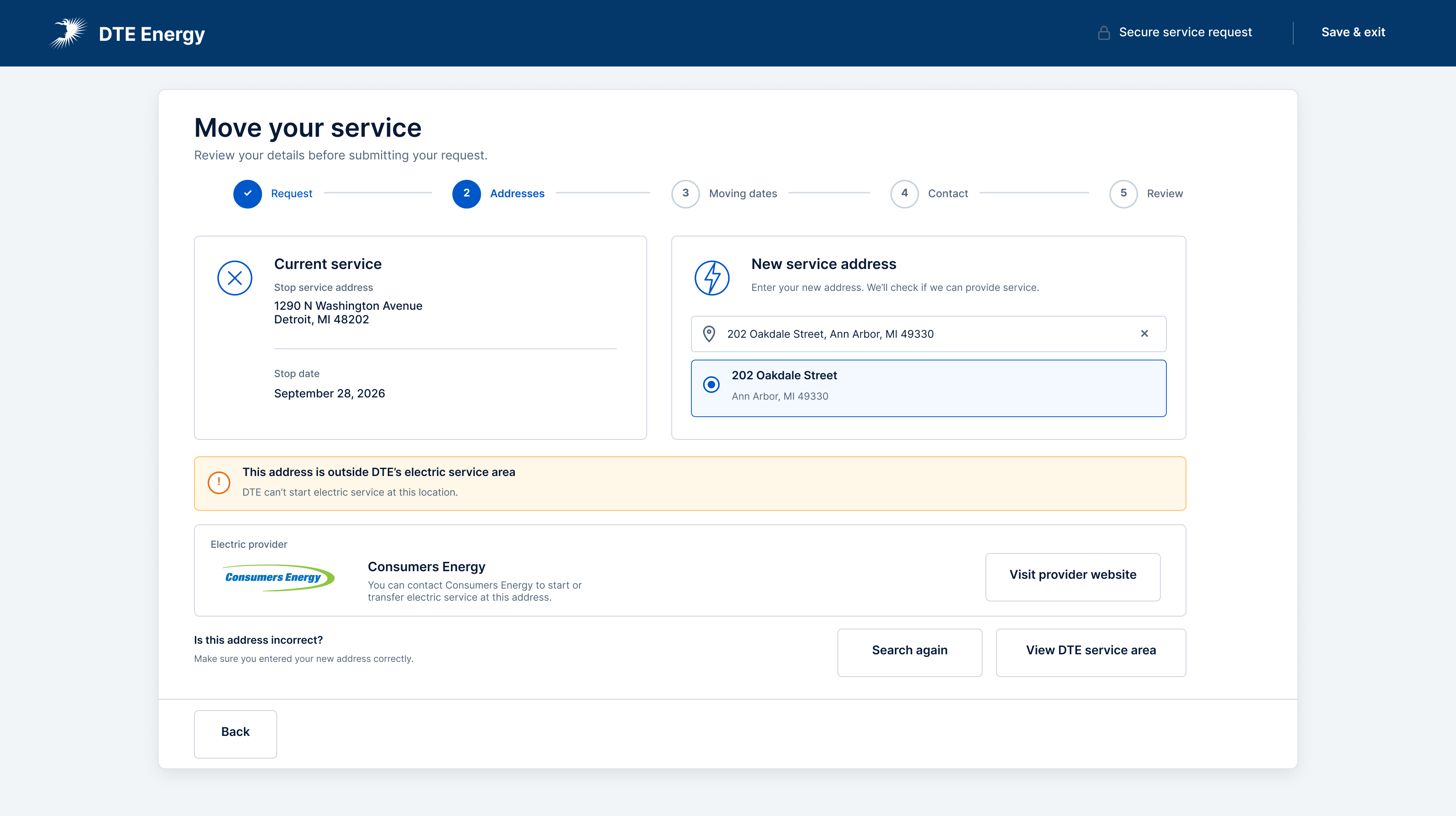
Explain the boundary clearly, identify the applicable provider, and offer useful paths forward instead of a dead end.
05 · Outcome
Make the transition understandable before anything changes.
One coordinated request
Starting and stopping service remain connected, reducing the need to manage two separate processes during a move.
Review before commitment
Addresses, dates, communication preferences, and final billing stay visible before the customer submits consequential changes.
A useful exception path
When the new address falls outside the service area, the experience identifies the applicable provider and preserves clear ways forward.
Next project