Customers need to report the right problem, recognize immediate danger, and understand what happens after submission.
Service reliability · Cross-platform experience
When the power goes out, clarity becomes infrastructure.
A connected web and mobile experience for reporting an electrical problem, understanding urgent safety guidance, and following restoration from submission through crew response.
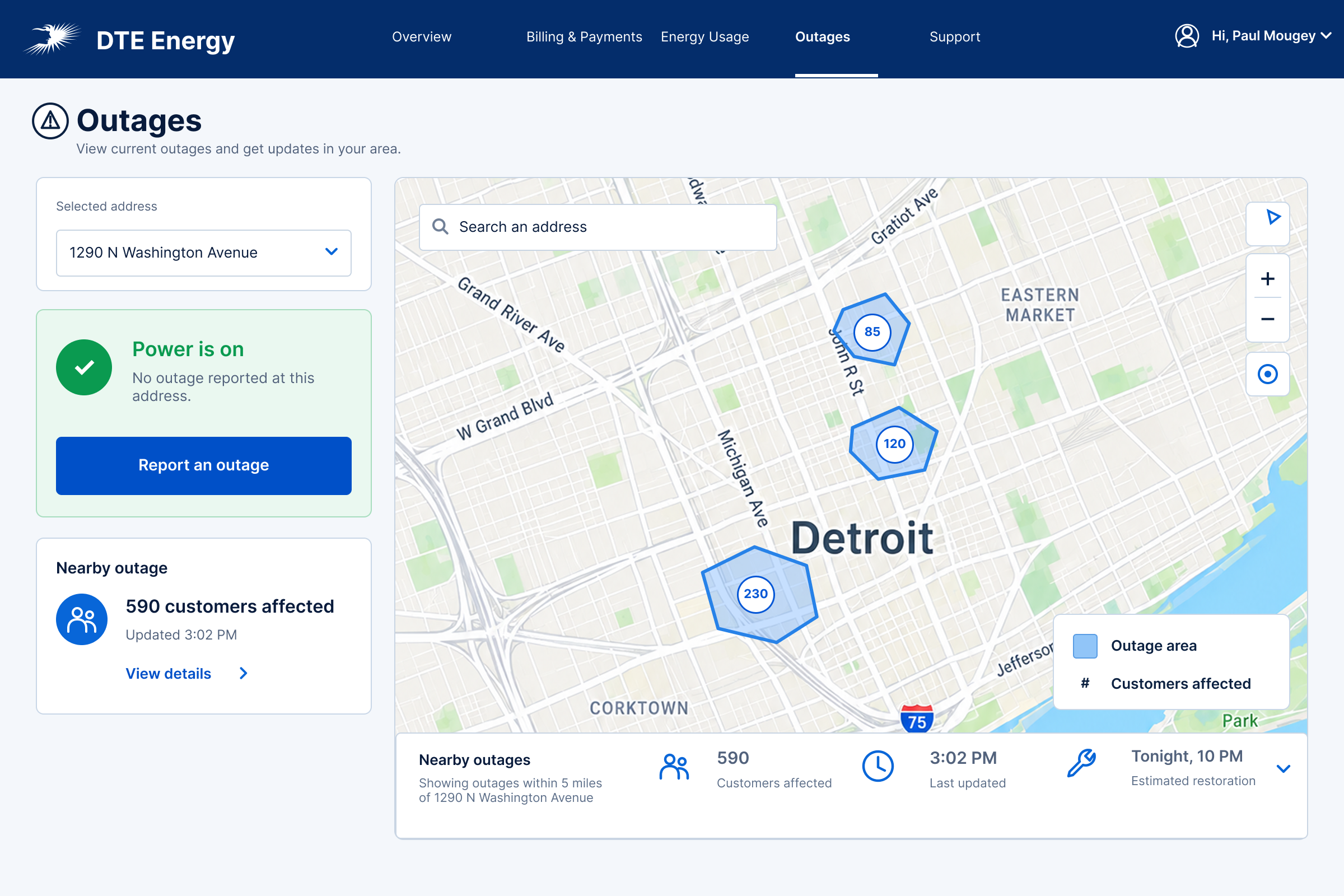
At a glance
One journey for a high-stress moment.
Connect problem selection, address confirmation, communication preferences, review, and restoration status in one consistent model.
A cross-platform experience that keeps safety guidance, report details, and crew progress visible at the moments they matter.
01 · The challenge
Urgency changes what good UX means.
People need to know what is happening, what is dangerous, and what comes next—without decoding the interface first.
The experience brings reporting and restoration into one connected system. Customers can identify the electrical problem, confirm the affected address, choose how to receive updates, and review the report before submitting it.
After submission, the same experience carries the customer from confirmation into active outage status, including crew progress and an estimated restoration time when one becomes available.
Separate danger from disruption
Keep downed-line guidance visually distinct from standard outage reporting.
Confirm every critical detail
Make the problem, address, contact preference, and submission state easy to verify.
Turn waiting into progress
Show what the utility knows, what crews are doing, and when the next meaningful update may arrive.
02 · Report an outage
Ask only what the response depends on.
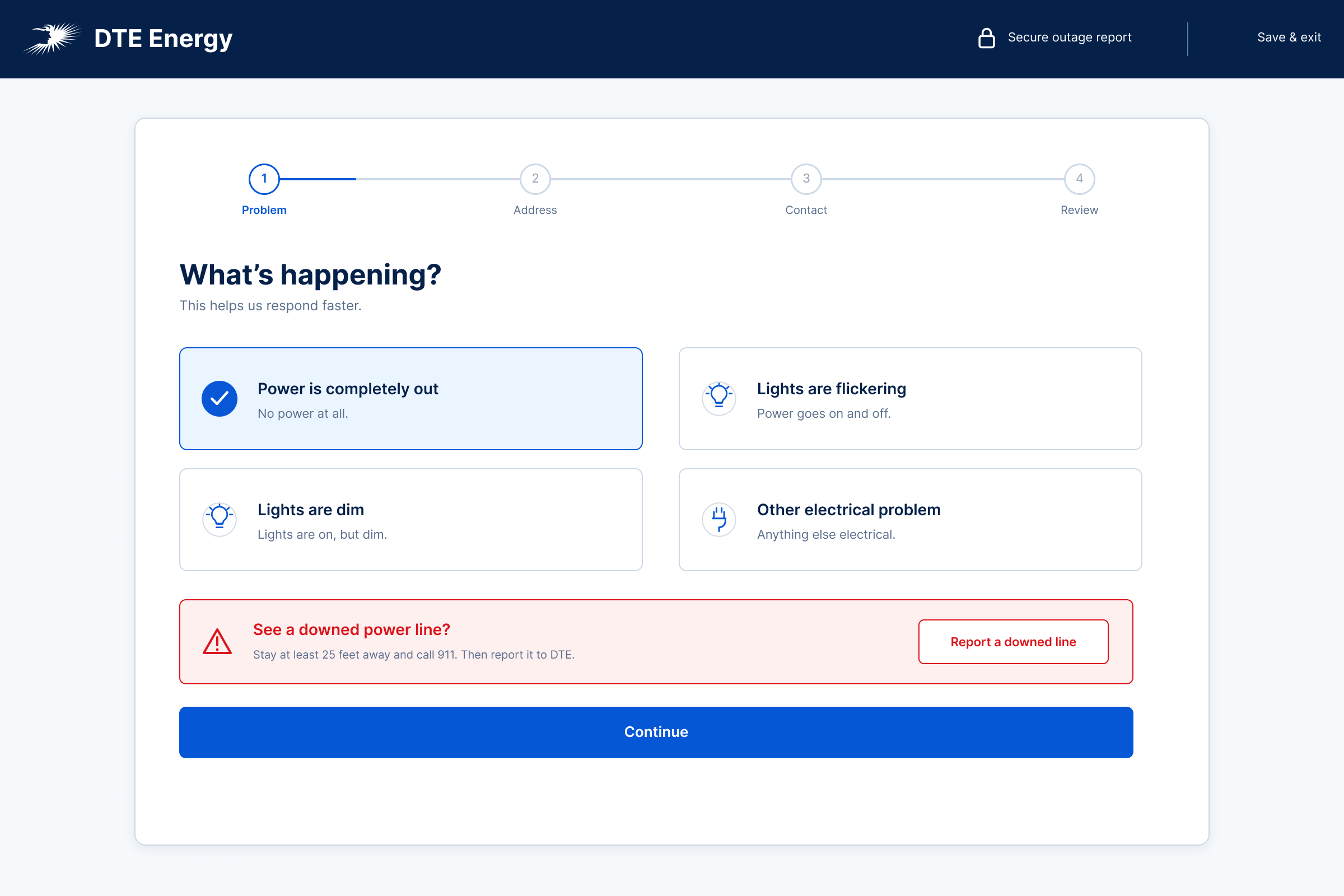
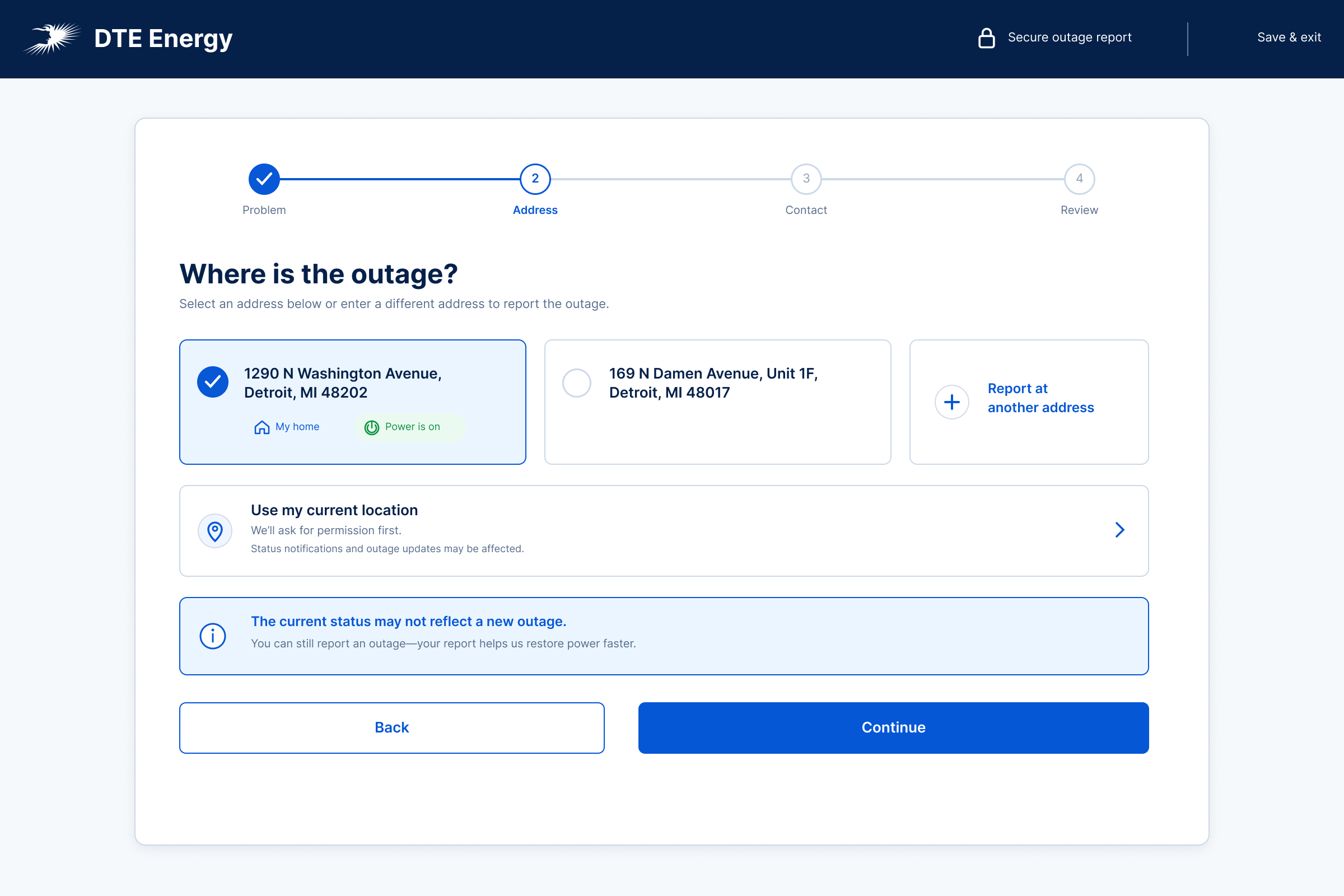
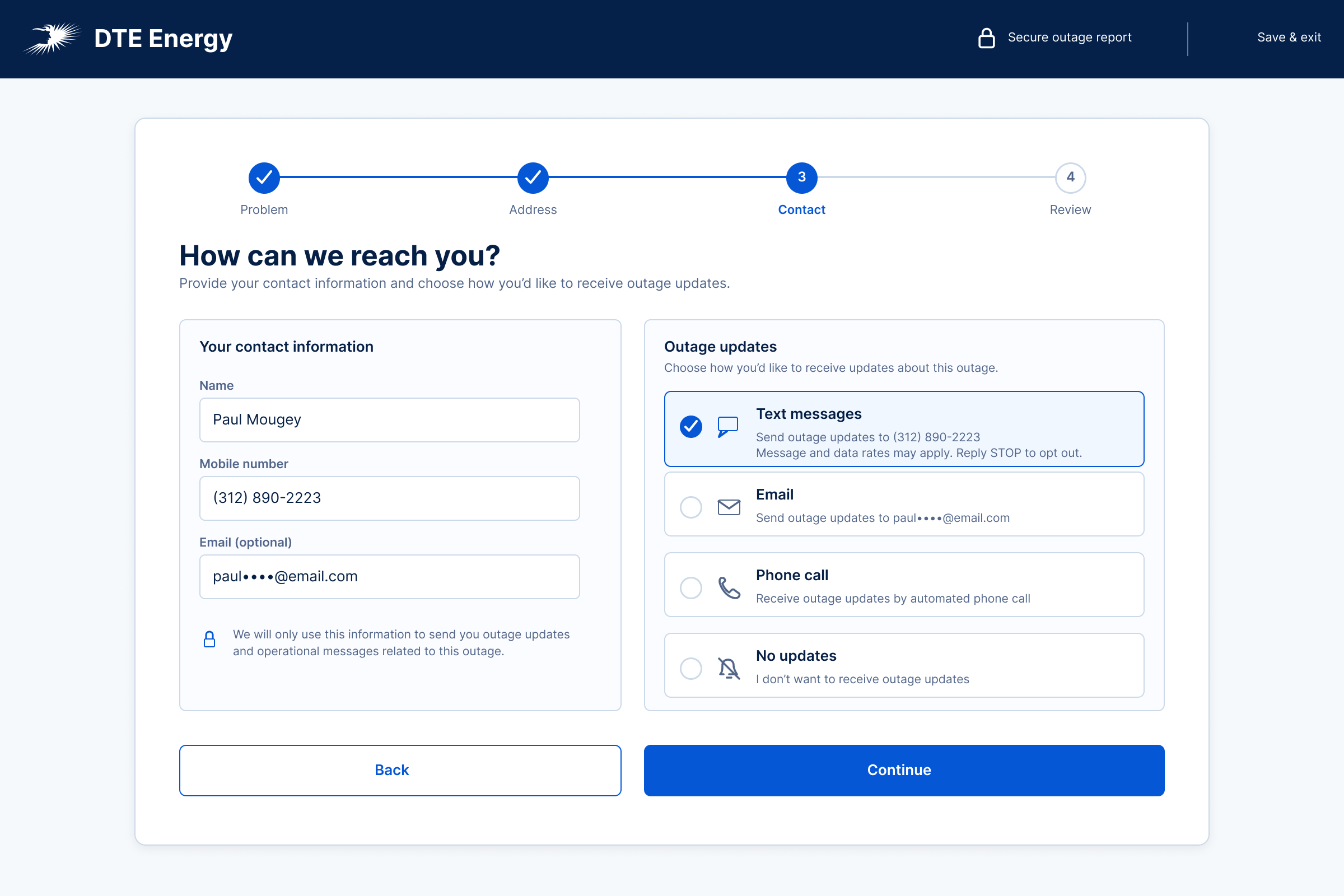
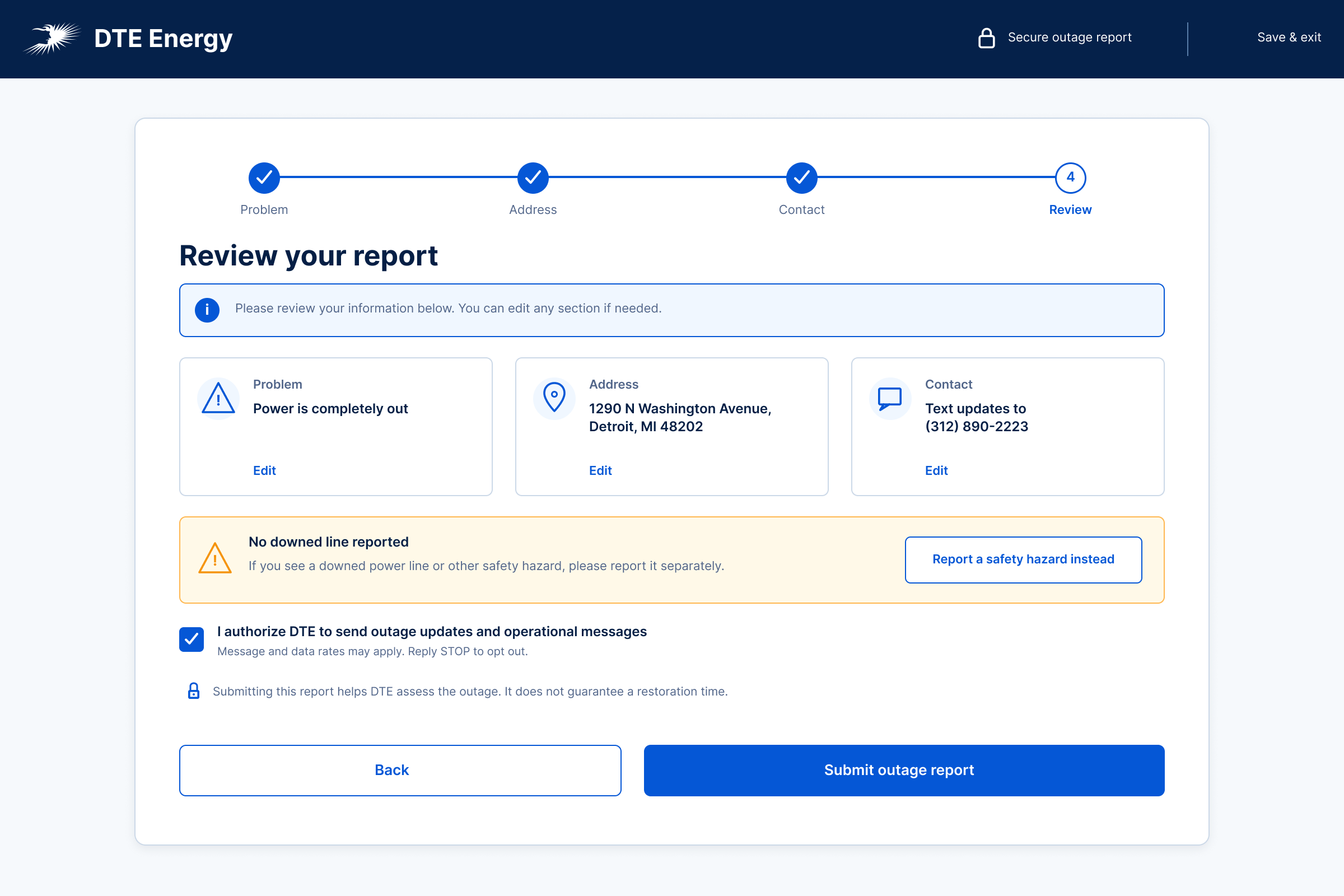
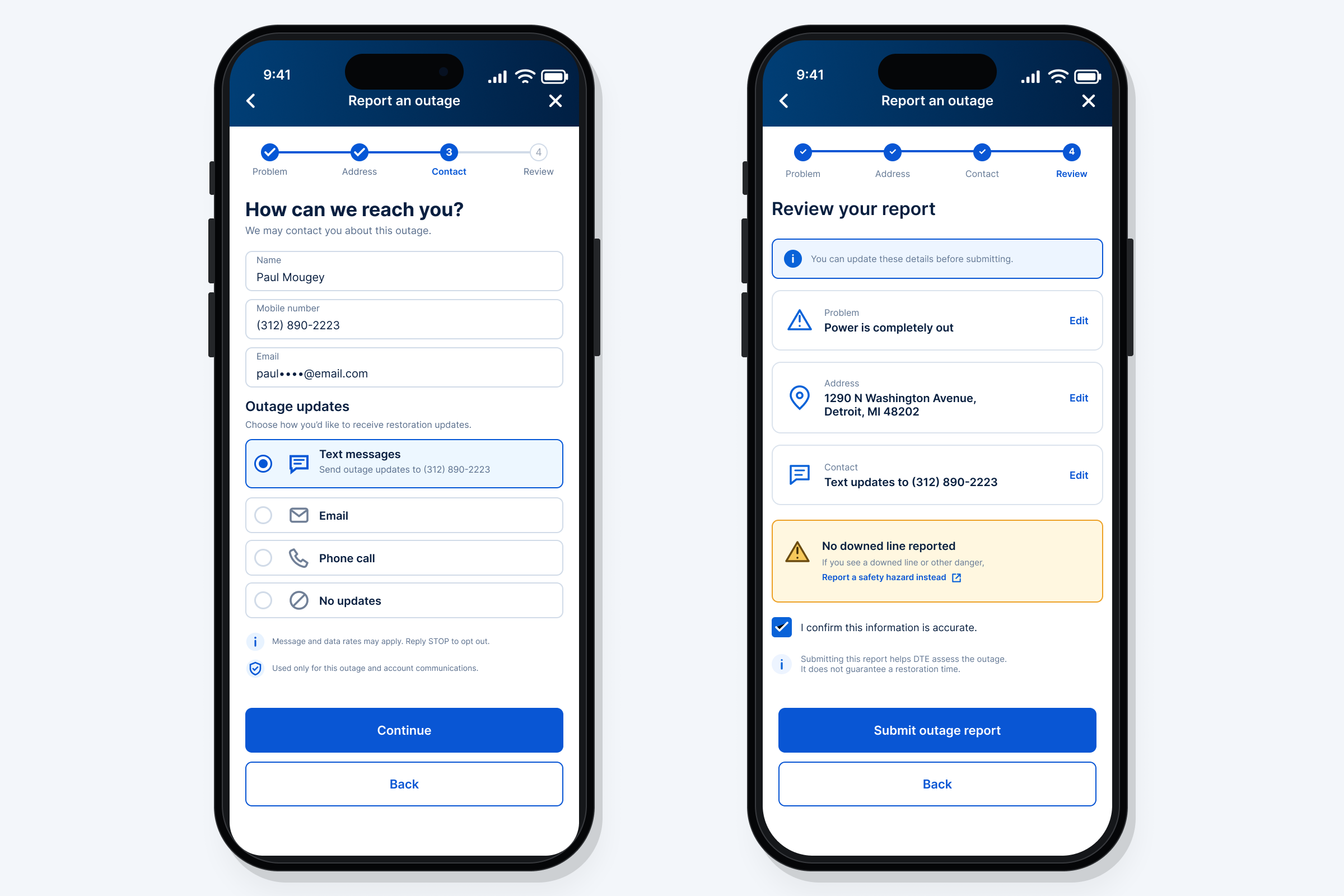
A four-step flow turns a stressful report into a sequence of understandable decisions, with safety guidance present at the moment it matters. Select any screen to view it at full size.
01Identify the problem
02Confirm the address
03Choose update preferences
04Review before submitting
03 · One system, multiple contexts
The same mental model, carried into mobile.
The channel changes. The questions, safety boundaries, and status language should not.
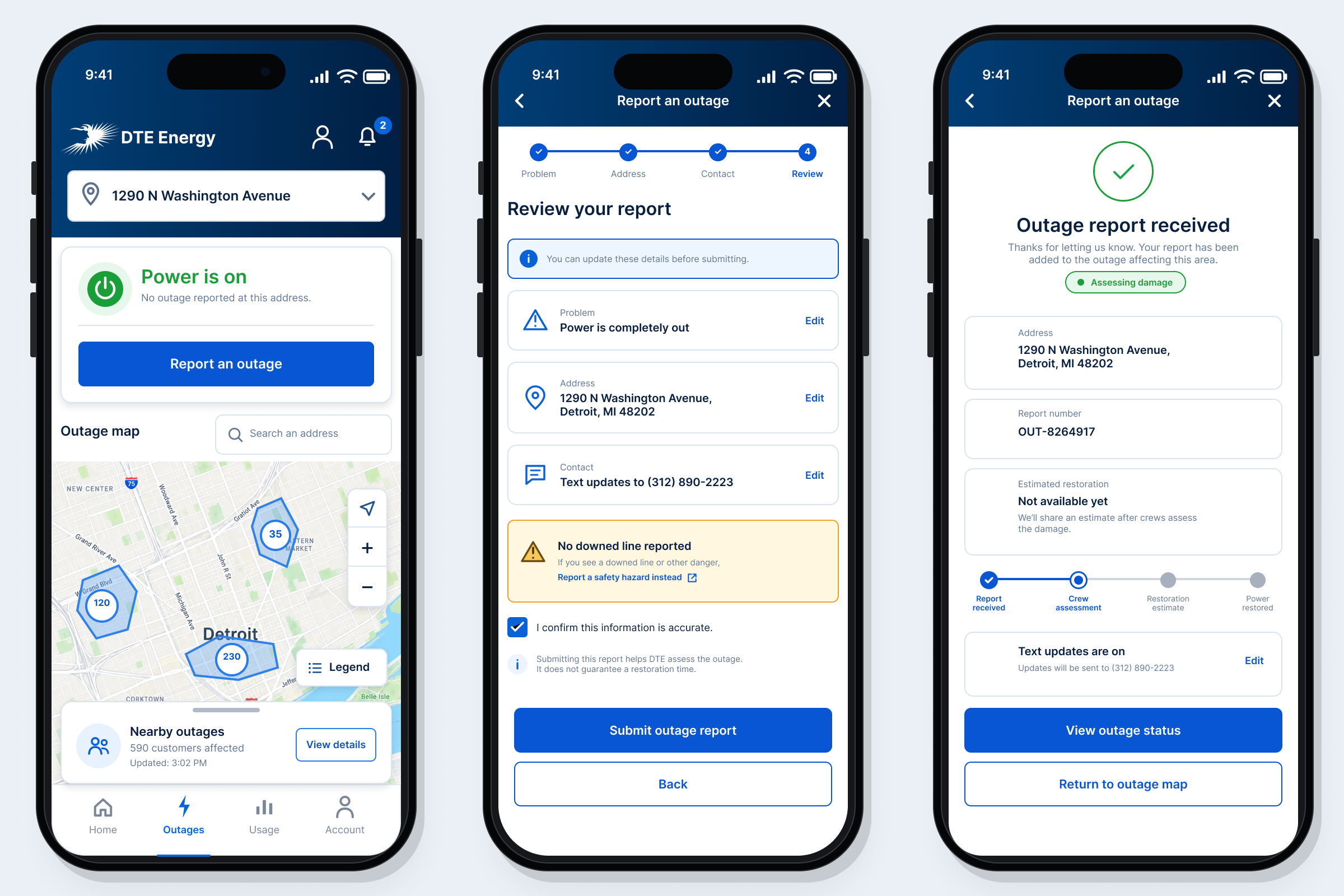
Mobile preserves the report structure and critical states while adapting the presentation to a smaller screen: address context first, concise review, clear confirmation, and restoration progress that can be checked away from home.
04 · Restoration status
Replace a blank wait with a visible sequence.
Confirmation answers “Did you receive my report?” Active status answers the harder question: “What is happening now?”
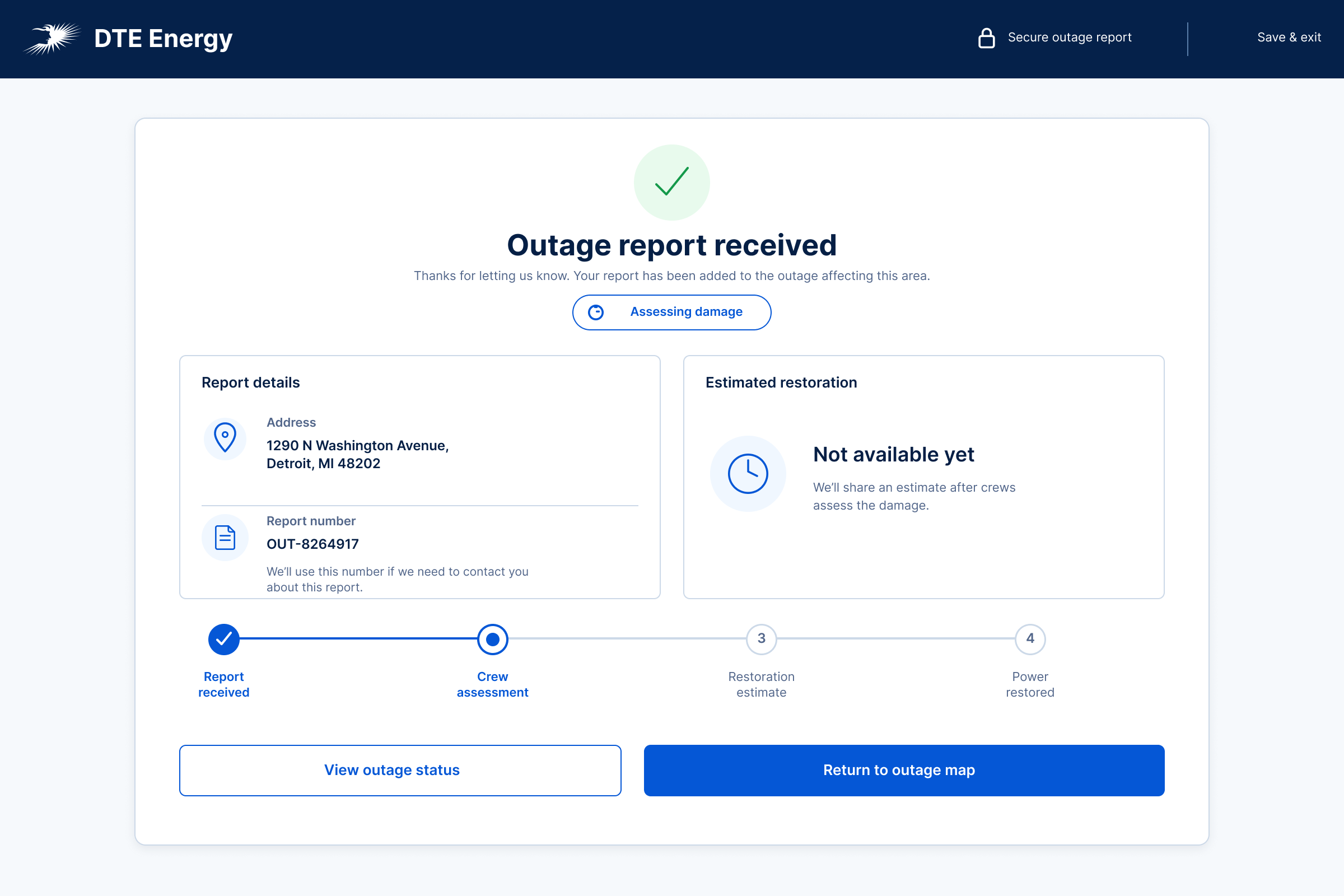
Confirm submission, preserve the report number, and set expectations when a restoration estimate is not yet available.
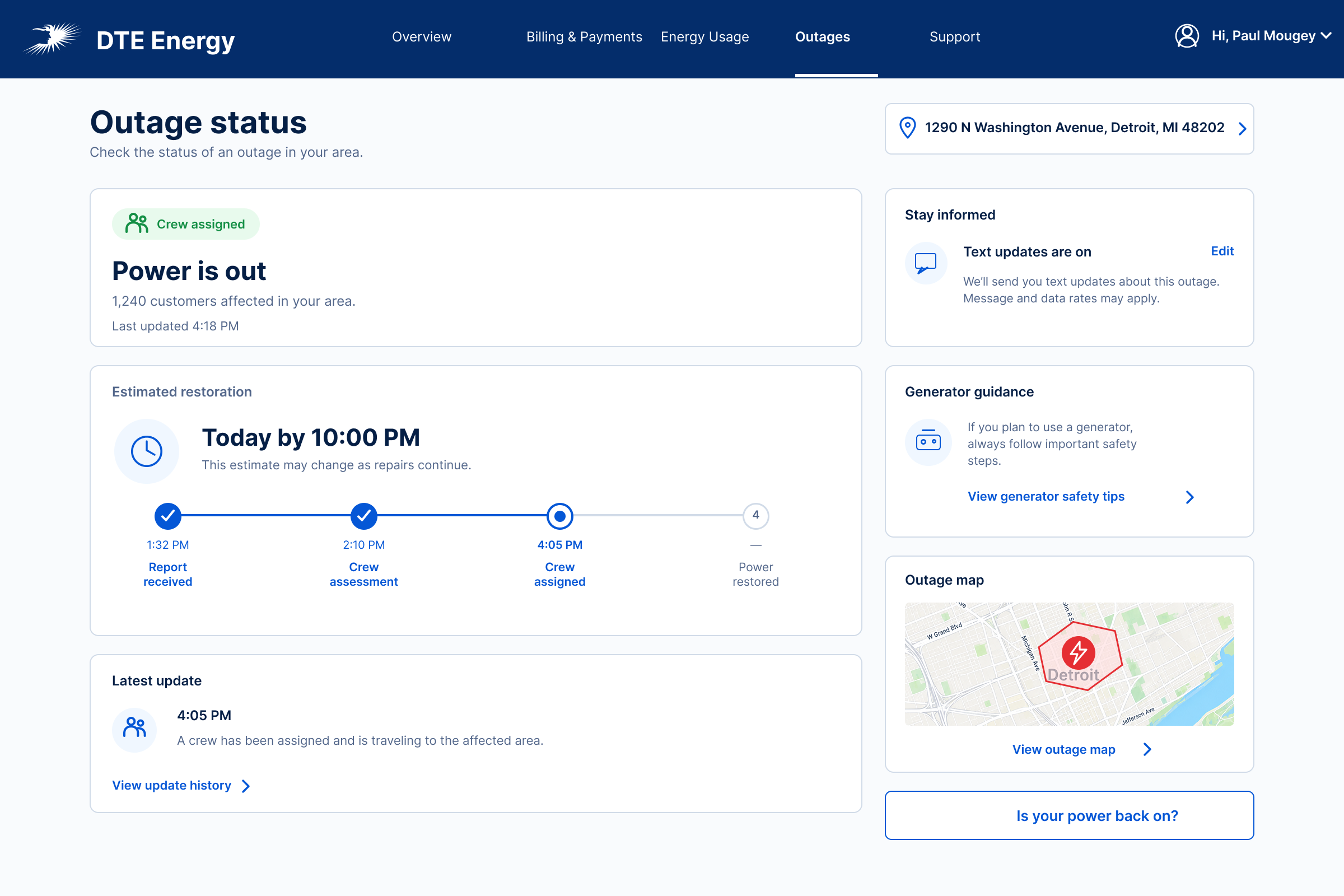
Connect crew progress, restoration timing, latest updates, map context, and safety information in one place.
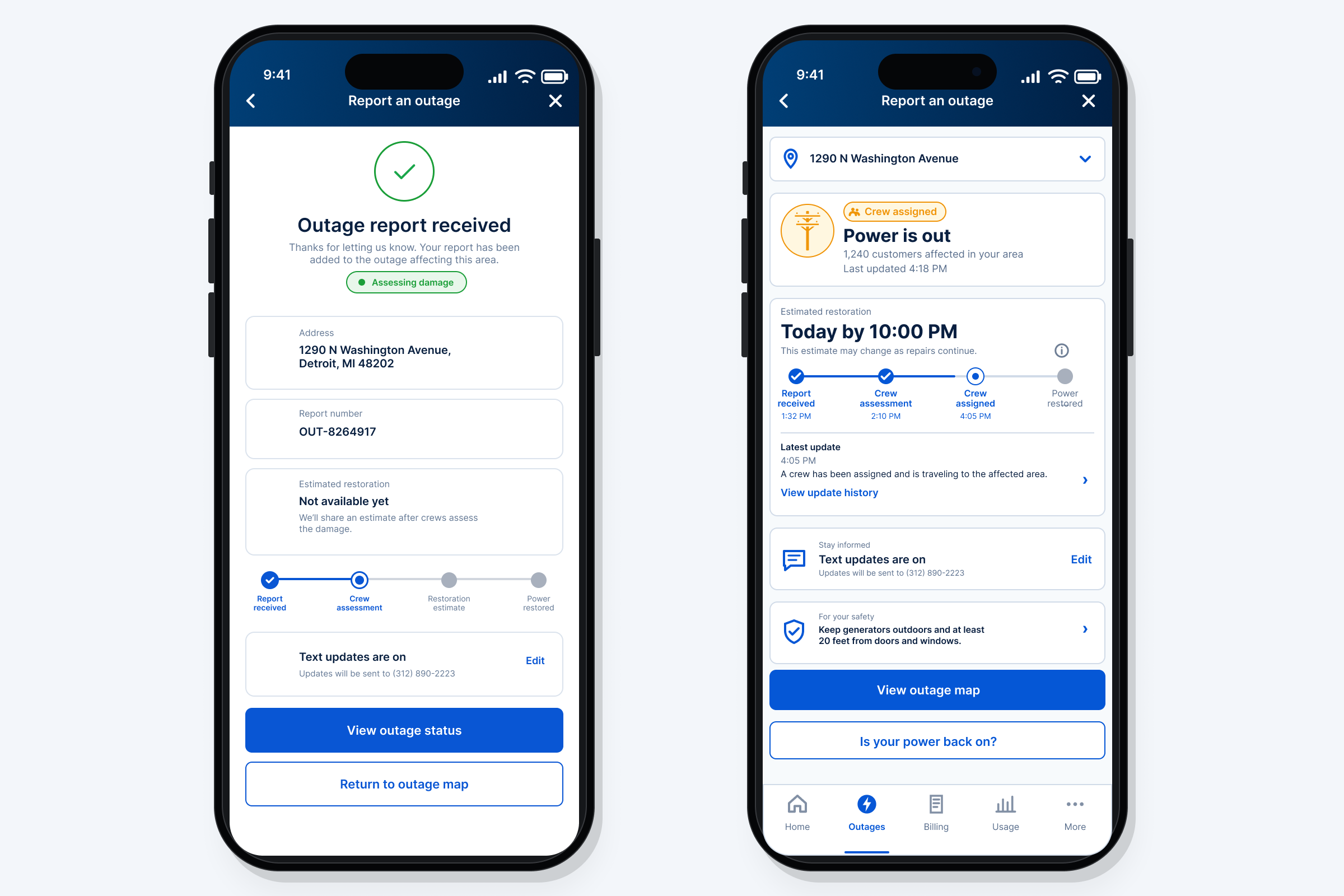
05 · Outcome
One service model, from first report to restored power.
Safer decisions
Downed-line guidance remains visually distinct from standard outage reporting, helping urgent hazards stand apart from service disruption.
Fewer unknowns
Clear checkpoints confirm the problem, location, communication preference, and submission state before the customer begins waiting.
Continuity across platforms
Shared language, states, and progress patterns reduce re-learning as customers move between desktop and mobile.
Next project